Behavioral Matching Adoption Platform: Reducing Returns and Increasing Connections
In Florianópolis, Santa Catarina, an ONG dedicated to animal rescue was struggling with high return rates and difficulty promoting responsible adoptions. Similar to many other Brazilian cities, there was a critical gap between the intention to adopt and the reality of finding the ideal companion. Existing platforms offered only basic information, lacking the depth needed to create lasting bonds.
The objective was clear: to create a digital platform focused on fostering genuine connections between pets and adopters, thereby reducing returns and optimizing the adoption process.
Context and Objective
The True Challenge
The real challenge went beyond just building another adoption website. Our insights, gathered from interviews with adopters, shelter representatives, and veterinarians, revealed a complex reality: fear of the unknown, inadequate information, and a matching process that failed to consider behavioral and lifestyle compatibility.
Shallow information, dispersed channels, limited time, and a legitimate concern: "What if this isn't the right animal for me?" The return of adopted animals was the painful symptom of a fragmented system where expectations started high and often ended in frustration.
We identified four critical points that needed to be addressed:
Limited visibility of animals available for adoption in local groups.
Insufficient characterization of pets, making it difficult for interested parties to get to know them beforehand.
Fragmented information across multiple channels, requiring excessive search time.
Insecurity in the adoption process, a significant responsibility that demanded greater support.
The Creation Journey
Our approach was rooted in design thinking principles, blending quantitative and qualitative methodologies to deeply understand unmet needs. We conducted interviews with four key groups: potential adopters, shelter managers, veterinarians, and individuals who had returned adopted animals.
We complemented our primary investigation with secondary research, analyzing existing platforms and studying successful cases. We mapped user journeys that revealed moments of frustration, anxiety, and joy throughout the adoption process. Every insight gathered was translated into concrete opportunities for design intervention.
The ideation phase involved workshops with stakeholders, where we prioritized essential functionalities and established clear metrics for success. Our focus was on measurable results: reducing return rates, decreasing the average time an animal spends in a shelter, and increasing satisfaction for both adopters and rescue organizations.
The Solution Found
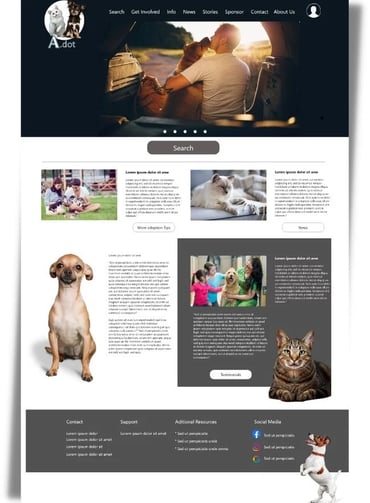
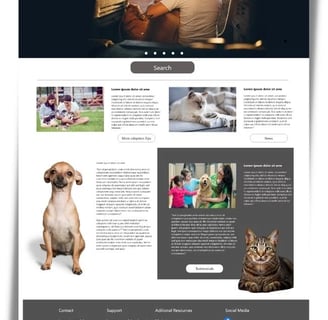
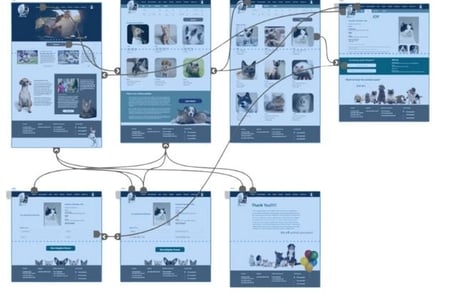
The result was more than just an animal catalog; it was an adoption ecosystem. The answer to the challenge materialized as a digital platform built on three strategic pillars:
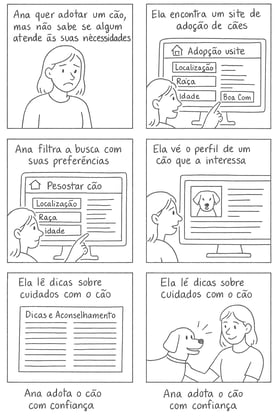
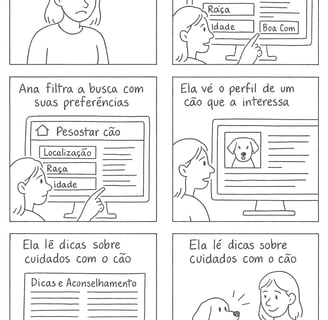
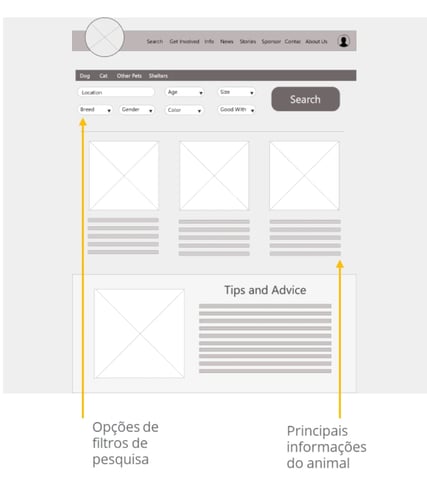
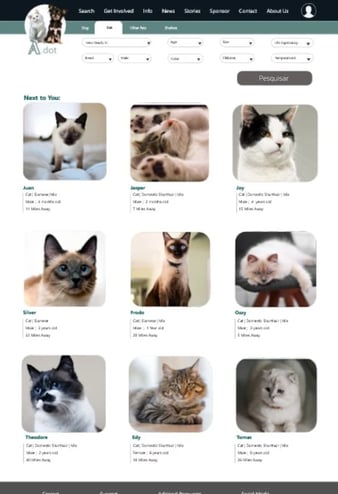
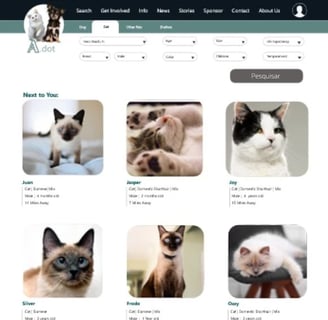
Smart Matching: We developed a filtering system that goes beyond physical characteristics, allowing searches by temperament, special needs, and behavioral compatibility. This system centers the adoption experience on what truly matters: a genuine connection between human and animal. The implementation of a compatibility algorithm that cross-references user preferences with pet characteristics, suggesting promising matches, was also considered.
Informational Transparency: Each animal profile was conceived as a complete narrative – not just attractive photos, but detailed histories, specific needs, and expected behaviors. This approach eliminates unpleasant surprises and prepares adopters for a successful integration.
Education and Support: Recognizing that adoption doesn't end when the animal goes home, we integrated personalized educational resources and continuous post-adoption support, transforming the process into an accompanied journey, not an isolated event. An educational dashboard guides adopters on adaptation, care, and post-adoption responsibilities – turning anxiety into preparedness.
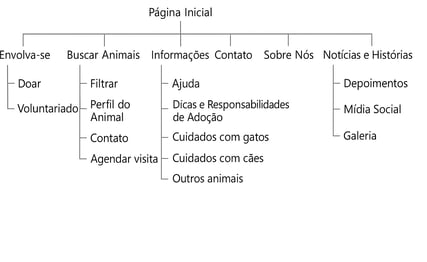
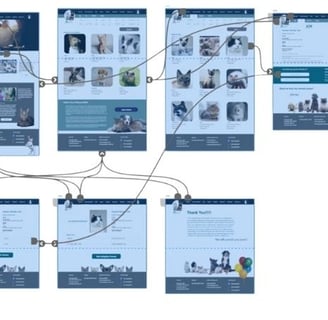
The information architecture was carefully planned to provide intuitive navigation, with a personalized dashboard for adopters to track their interactions, favorite pets, and access educational content tailored to their specific needs.
Projected Impact
Though conceived as a preliminary project for future implementation, its potential impact was carefully measured through quantitative and qualitative metrics. We designed indicators to evaluate the efficiency of the adoption process, user engagement, and broader social impact.
For shelters, the platform could represent an evolution in how they present their animals, significantly increasing each pet's visibility and reducing the average length of stay in their facilities. For adopters, it means more informed decisions and greater preparedness for the challenges of integrating a new family member.
Perhaps the most profound impact will be on the quality of adoptions—each successful match means an animal has found not just a home, but their ideal home, and a family that has gained the perfect companion for their lifestyle and expectations.
Expected Outcomes
Reduced average time from search to completed adoption: We expect the streamlined process and intelligent matching to significantly shorten the period between someone starting their search for a pet and successfully completing an adoption.
Increase in successful adoptions (no returns in the first 6 months): By ensuring better matches and providing comprehensive support, we aim to drastically reduce the number of animals returned to shelters within the critical initial six-month period, leading to more permanent homes.
Decrease in the average length of stay for animals in shelters: With increased visibility and more efficient matching, animals should find their forever homes faster, freeing up valuable space and resources at rescue facilities.
Significant growth in profile completion and user retention on the platform: We expect the platform's user-friendly design and valuable features to encourage comprehensive profile completion from both shelters and adopters, leading to strong user engagement and repeat visits.
Lessons Learned
This project went far beyond technical development; it became a valuable lesson in mediating different perspectives and needs. Balancing the interests of shelters, veterinarians, and adopters demanded deep empathy and the ability to prioritize in complex scenarios.
I learned the critical importance of in-depth qualitative research when working with emotionally charged issues like animal adoption. Every design decision needed to consider not only usability but also the emotional impact and well-being of all parties involved.
The challenge of keeping information updated in a system dependent on multiple contributors revealed the necessity for simplified processes and clear incentives for all participants. Technology alone doesn't solve complex social problems; it must be accompanied by well-planned human systems.
Final Reflection
This project stands as a testament to the power of human-centered design in addressing complex social challenges. While it began as a technical endeavor to build a digital platform, it evolved into a profound exploration of empathy, connection, and responsibility within the context of animal adoption.
Even with a shared common goal, one of the significant challenges encountered was the difficulty in reaching consensus among the various stakeholders involved. While everyone wanted to improve animal adoption, their differing perspectives, operational realities, and individual priorities often led to friction in agreeing on specific approaches.
Bridging these diverse viewpoints to align on platform features, data requirements, and user flows proved to be a complex task. Reconciling these different needs and expectations required extensive dialogue, negotiation, and a willingness from all parties to understand and adapt to others' concerns to ensure the platform genuinely served everyone.
Ultimately, this project underscored that technology is a powerful enabler, but its true impact is unlocked when it's meticulously integrated with a deep understanding of human (and animal in tis case) needs. It's a reminder that even in the digital realm, the most effective solutions are built on empathy, clear communication, and a commitment to transforming complex processes into joyful journeys.